Why who surrounds you, and how they make you feel, shapes decline, dying, death, and everything after
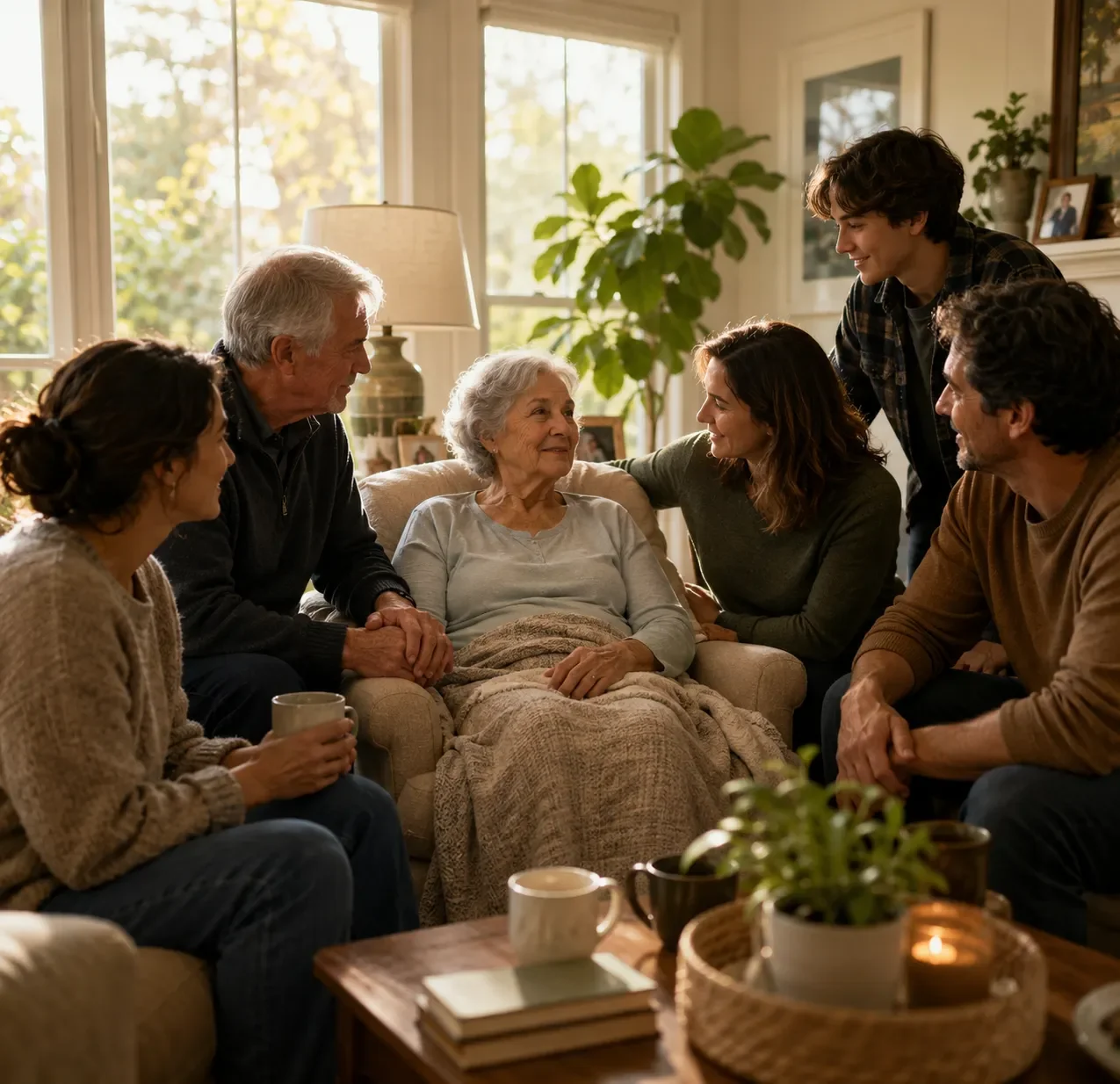
Recently we sat together with the weight we carry as caregivers, the quiet, invisible labor of loving someone through their decline. And last week, we walked through the importance of receiving, of allowing ourselves to be held rather than only holding others. I heard from so many of you after both pieces, and something in those messages kept returning to the same thread, which is that none of us are meant to carry this weight alone, and none of us are meant to hold it without also being willing to receive. So this week I want to gently follow that thread all the way through, into the tender work of forming your circle of support. This is for those of you who are moving through your own decline and want to think intentionally about who surrounds you. It is also for the spouses, partners, adult children, family members, close friends, and beloved community who are holding someone else through this passage. Whichever seat you are sitting in, I hope what follows offers you something true to hold onto.
The financial weight that so rarely gets spoken aloud
Before we talk about who belongs in your circle, I want to name something that often sits underneath all of it in silence, and that is the financial cost of decline, dying, and the season that follows. It is one of the least discussed parts of this whole experience, and yet it shapes so much of what becomes possible or impossible for a family.
Caring for someone through a serious illness carries a real economic toll, one that researchers describe as significant and multidimensional, touching a family’s stability on many fronts at once. Studies have found that a meaningful share of families facing a terminal illness end up spending down most or all of their savings, taking out loans, or picking up additional work just to keep pace with the costs of care, and one study of family caregivers of women with terminal breast cancer found that more than three-quarters reported missing work due to their caregiving responsibilities in the final stage of the illness. When a caregiver has to step back from paid work, whether by choice or necessity, that loss of income compounds everything else they are already carrying. And this does not begin to touch the cost of hiring outside help, whether that is a home health aide for a few hours a week or full time professional care, which remains out of reach for so many families precisely when they need it most.
I share this not to add weight to what you are already holding, but because I believe naming it plainly is its own form of care. If you are building a circle of support, know that financial strain is very often part of the terrain, quietly shaping decisions that look unrelated on the surface. And if there are people in your circle with the capacity to help in this way, whether through direct contribution, researching financial assistance programs, or simply sitting with the numbers alongside you, that too is a profound offering.
There is another piece of this worth naming plainly as well. A circle of support made up of community, family, friends, and partners is not only an emotional gift, it is also a financial one. Every hour a friend spends sitting with someone who is declining, every meal a neighbor brings, every ride a family member offers to an appointment, is an hour of paid care that does not need to be purchased. This unpaid labor of love, offered freely by the people who show up, carries real financial weight of its own, and it genuinely reduces the toll that would otherwise fall on a family trying to cover the cost of hired help. A wide, willing circle is not only a comfort. It is also, quietly, a form of financial relief.
Why the size and shape of your circle matters
There is a natural pull, when someone we love begins to decline, toward narrowing the world down to just one or two trusted people. I understand that instinct completely, and if a smaller circle is genuinely what feels right and sustainable, there is nothing wrong with that. But research on caregiving networks offers something worth sitting with here. In one small qualitative study that used participatory mapping with family caregivers in focus groups, researchers found that as networks were intentionally grown over the course of a terminal illness, the bonds between the original core members did not weaken or dilute, they actually grew stronger, and every member, whether close to the center or further out on the periphery, contributed something the network genuinely needed.
A separate study following end of life outcomes across thirteen countries found that the size and structure of a person’s social network was tied to meaningful differences in how and where they died, including whether they were able to remain at home surrounded by what was familiar. Living alone with a thin network changes the entire landscape of dying in ways that living inside a fuller one simply does not. None of this means that more people automatically means better care. It means that scarcity of support carries real, measurable weight, and that widening the circle, even slowly, even imperfectly, opens possibilities that would not otherwise exist.
And when I say circle, I want to be sure we are including everyone it can hold. Spouses and partners often carry the heaviest day to day load, and adult children and other family members frequently step in alongside them, but friends and community belong in this circle too, sometimes even more fully than blood relatives can. The friend who has known you since childhood, the neighbor who shows up without being asked, the members of your spiritual or creative community who have walked beside you through other seasons of life, these people are not peripheral additions to your circle. They are often some of its most steady and sustaining threads.
It is not only who, it is how they make you feel
Here is where I want to slow all the way down, because I believe this is the piece that gets overlooked most often. It is not enough to simply have people present in the room. What matters just as deeply is the quality of what they bring in with them when they arrive.
Think of the people who have sat beside a bed or answered a call in the middle of the night. Some of them walk in and something in the room settles. Their presence is steady and unhurried. You find yourself breathing a little more freely without quite knowing why. Others walk in still carrying their own fear, their own unprocessed grief, their own need to fix things or perform strength, and the room tightens instead of softening. Neither kind of person is a bad person, truly. But they offer very different gifts to someone who is dying, and to the caregiver who is already running on empty.
Research on grief and connection affirms what so many of us feel intuitively. Studies on prolonged grief have found that the quality of our interactions with others matters more than the sheer number of them, particularly around the more anxious or avoidant patterns that can show up in how people connect with someone who is suffering. A systematic review looking at bereavement after sudden or traumatic loss found consistent evidence that social support is tied to lower rates of depression and post-traumatic stress, though its relationship to complicated grief was less consistent, suggesting that support is not a single ingredient we either have enough of or do not. It has texture, and that texture shapes the outcome in ways that are easy to feel and harder to name.
So as you think about who belongs in your circle, or whose circle you are helping to build, I would ask you to sit honestly with this question. When this person is near, do you feel peaceful, at ease, and truly held? Or do you find yourself anxious, unsettled, and quietly responsible for managing their emotions on top of everything else already asking for your attention? That honesty is not a betrayal of love. It is a form of stewardship, both for the person who is dying and for the caregiver who cannot afford to spend what little energy remains soothing someone else’s discomfort.
